Home
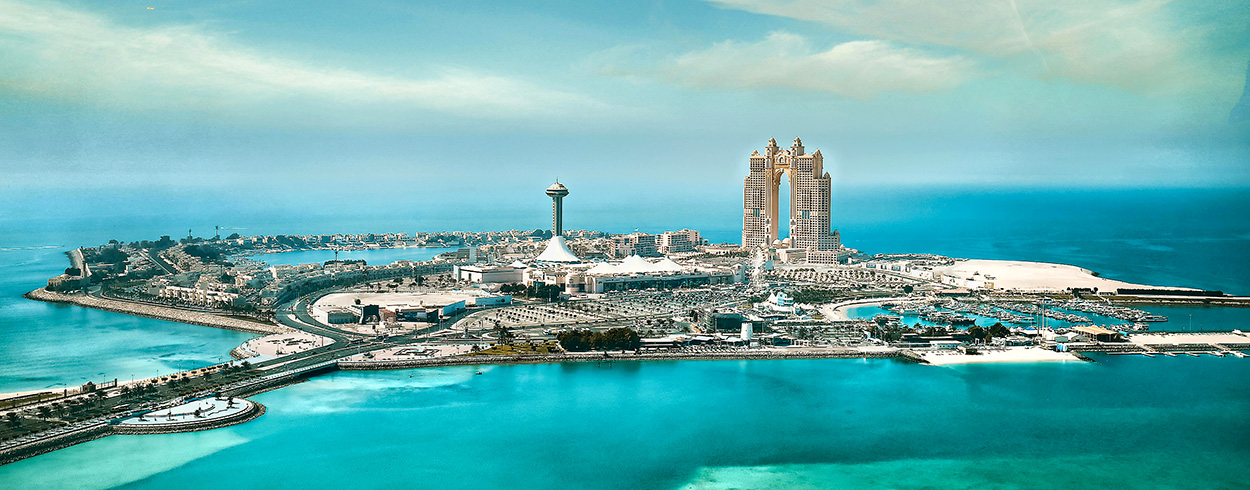
Abu Dhabi is the capital of the United Arab Emirates (UAE) and the largest of the seven emirates, occupying over 80% of the country’s landmass. The city of Abu Dhabi sits on a T-shaped island in the Persian Gulf, connected to the mainland by several bridges.
Accessibility:
-
By Air: Zayed International Airport (AUH) — major hub for Etihad Airways, with direct flights from 120+ cities globally. Second airport: Al Ain International (AAN).
-
By Road: 90 minutes from Dubai (E11 highway); well-connected to Oman via Mezyad border.
-
By Sea: Zayed Port receives cruise ships; ferry services to islands.
-
Domestic: Excellent highway network; domestic flights to Al Ain and Sir Bani Yas Island.
Cultural Identity & Atmosphere
Abu Dhabi moves at a different rhythm than its neighbors. While Dubai projects ambition and Doha projects wealth, Abu Dhabi projects confidence rooted in heritage.
The atmosphere is one of measured hospitality — traditional majlis (council) culture means visitors are treated as guests, not transactions. The dress code is modest but not restrictive; alcohol is available in licensed hotels and venues; and the city is notably safe, clean, and orderly.
Key Cultural Pillars:
-
Bedouin Heritage: Hospitality, poetry, and falconry remain living traditions
-
Islamic Architecture: Not just mosques — geometric patterns, wind towers, and courtyard houses
-
Pearl Diving Legacy: Pre-oil economy preserved in museums and cultural experiences
-
Future Vision: Masdar City (sustainable urbanism) and Guggenheim Abu Dhabi (contemporary art)
Why VisitAbu Dhabi?
Compelling Reasons to Visit
1. Cultural Capital of the Arab World No other city in the Middle East has invested so heavily in cultural institutions while preserving living heritage. The Louvre Abu Dhabi is not a branch — it is a philosophical statement about universal human creativity. Doha has ambition, but Abu Dhabi has delivery.
2. Nature at Scale From the world’s largest sand desert to protected mangrove forests where flamingos outnumber tourists, Abu Dhabi offers nature without the crowds. Dubai’s desert experiences feel commercial by comparison; Oman’s are more rugged but harder to access.
3. Safety & Predictability Ranked #1 in the world for personal safety (Numbeo), Abu Dhabi removes the friction from travel. Families, solo women travelers, and MICE planners can operate with confidence — something Doha is building toward but hasn’t yet matched at scale.
4. Value-Positioned Luxury Five-star hotels here often cost 30-40% less than equivalent properties in London, Paris, or New York, and 20-25% less than comparable Dubai properties. The “luxury for less” proposition is genuine.
5. Accessibility English-speaking, well-signposted, and compact. You can have breakfast in a desert camp and dinner at a Michelin-starred restaurant without changing time zones. Unlike Muscat, which requires a car, Abu Dhabi’s core attractions are taxi-accessible.